
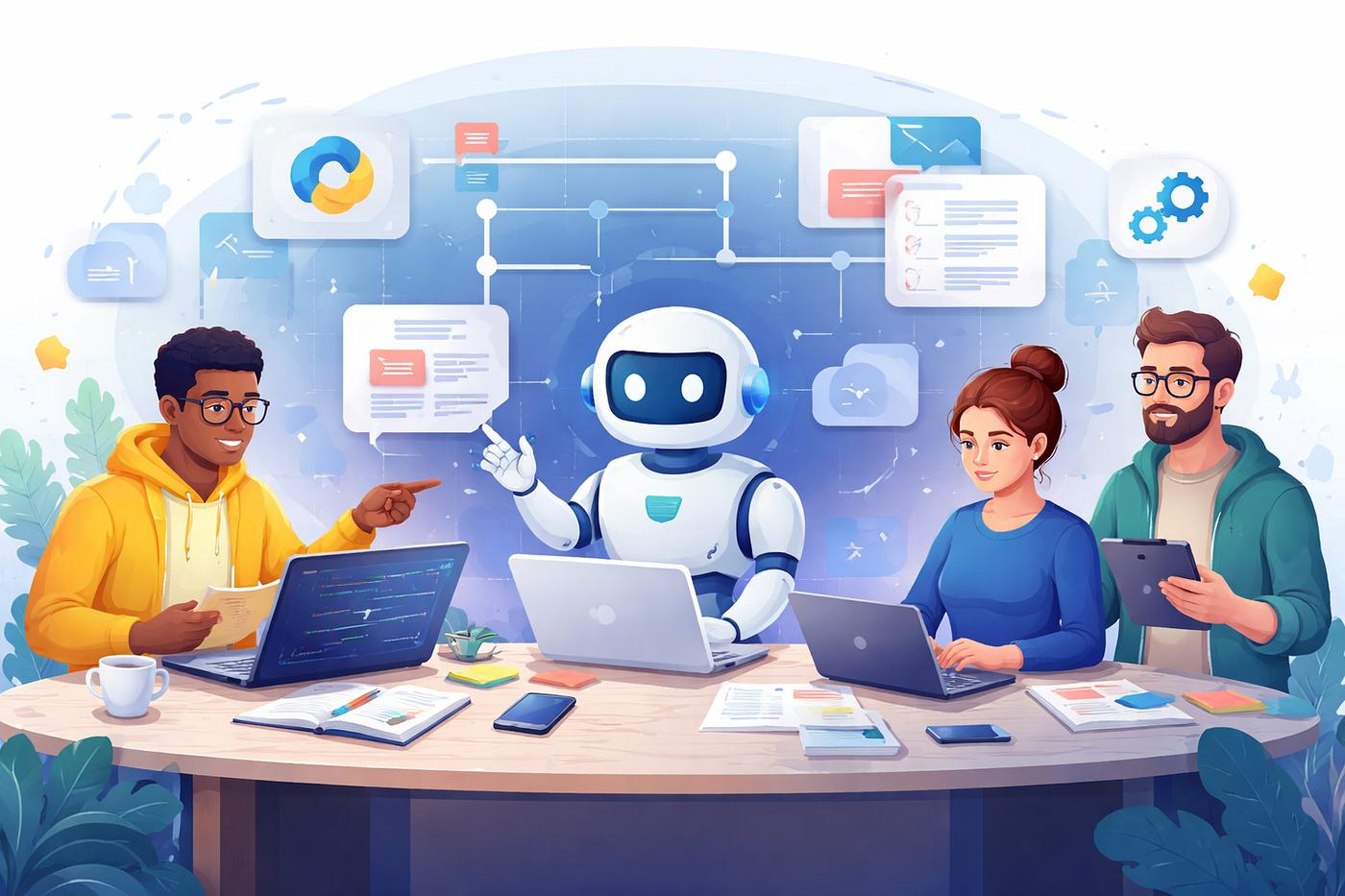
AI Is Changing the Way Software Is Built
Artificial intelligence has rapidly become part of the modern software development workflow. Over the past year, AI-powered coding assistants have evolved from simple autocomplete tools into capable development partners that can generate code, explain unfamiliar libraries, create unit tests, identify bugs, and even help design software architecture.
Rather than replacing software engineers, these tools are changing how developers spend their time. Routine and repetitive coding tasks can now be completed more quickly, allowing engineers to focus on solving complex business problems, improving system architecture, and delivering better user experiences.
For many technology companies, the question is no longer whether AI should be used in development, but how to integrate it responsibly into everyday engineering practices.
From Writing Code to Solving Business Problems
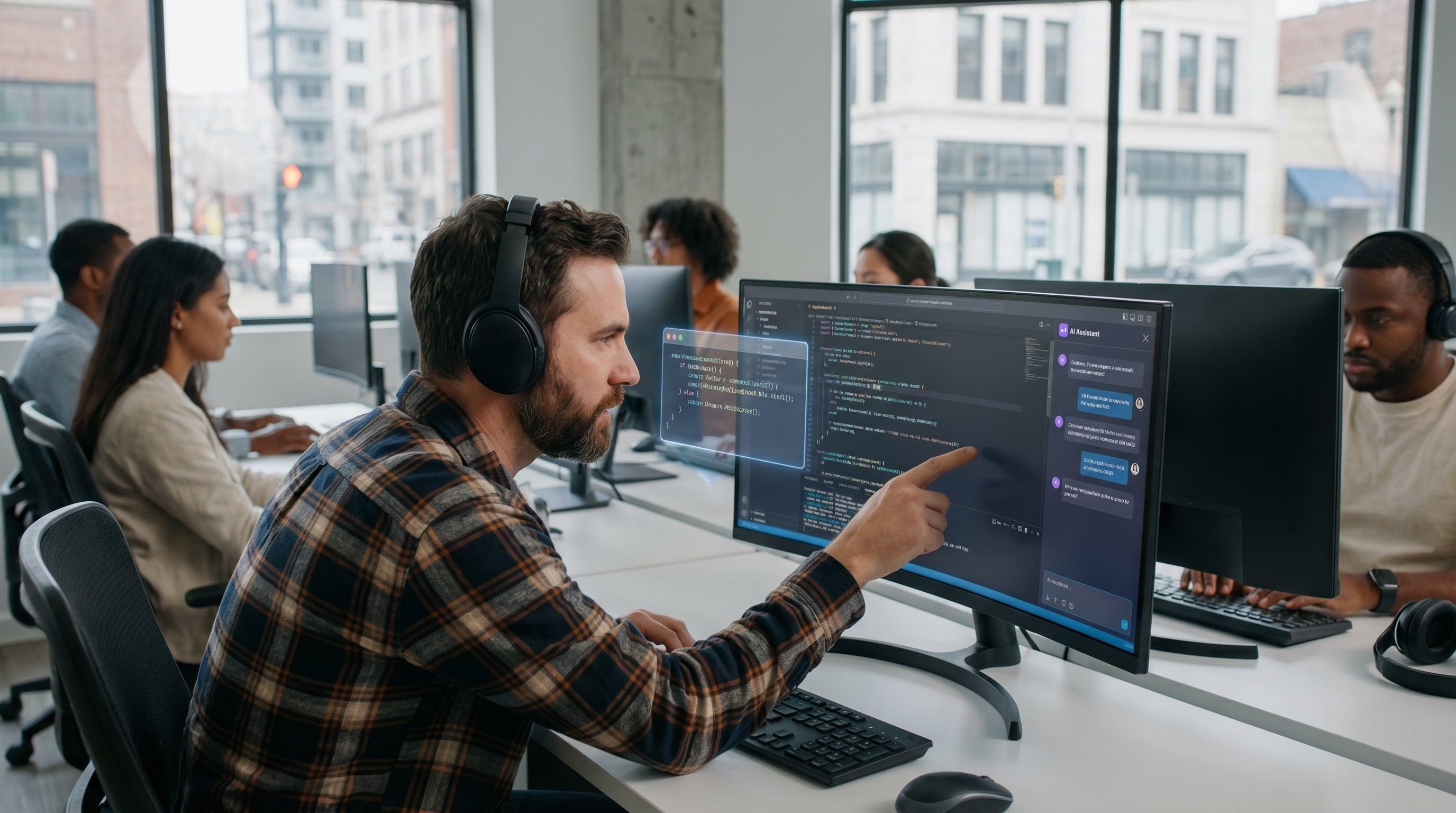
Traditional software development often required developers to spend significant time writing repetitive boilerplate code, configuring projects, and searching documentation.
Today, AI can assist with many of these tasks by helping developers:
Generate reusable code structures
Create API endpoints
Explain unfamiliar codebases
Write unit and integration tests
Detect potential bugs before deployment
Suggest performance improvements
Generate documentation
Translate code between programming languages
This allows engineers to dedicate more time to understanding customer requirements, improving system reliability, and designing scalable solutions.
The value of a software engineer is increasingly measured not only by how much code they write, but by how effectively they solve real-world business challenges.
AI Still Needs Human Judgment
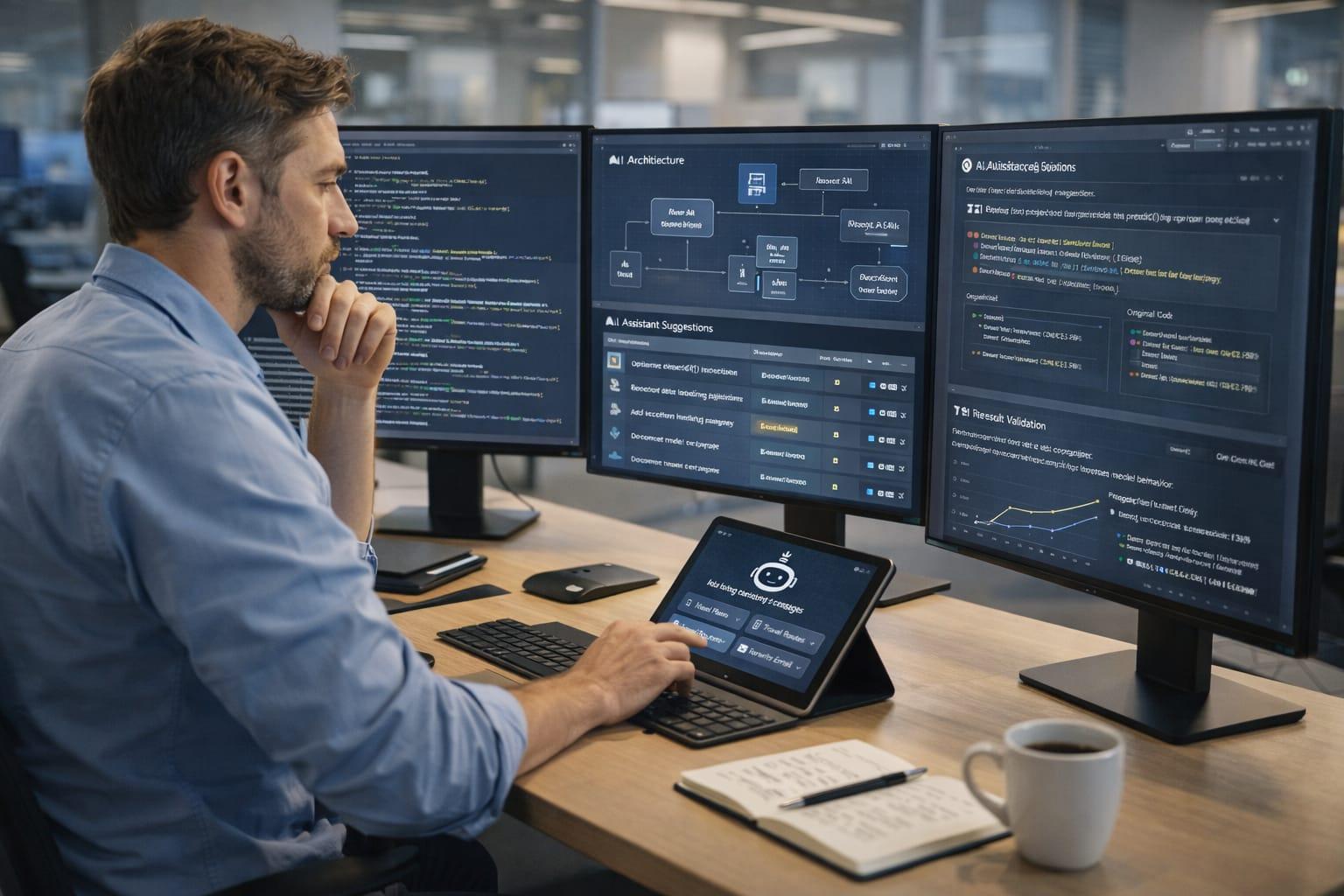
Despite its growing capabilities, AI remains a tool—not a replacement for experienced engineers.
AI-generated code can contain logical errors, security vulnerabilities, outdated practices, or assumptions that don't align with a project's business requirements.
Experienced developers are still responsible for:
Reviewing generated code
Ensuring application security
Designing scalable architecture
Making technology decisions
Protecting sensitive data
Maintaining coding standards
Ensuring regulatory compliance
In critical industries such as healthcare, finance, logistics, and education, these responsibilities cannot be delegated entirely to AI.
Human oversight remains essential.
Software Architecture Matters More Than Ever
One emerging trend is that AI performs best when working within a well-designed software architecture.
Projects with clear folder structures, consistent coding standards, modular components, and comprehensive documentation enable AI tools to generate more accurate and maintainable code.
Conversely, poorly organized codebases often produce inconsistent or unreliable AI-generated suggestions.
This has encouraged many engineering teams to invest more heavily in:
Clean Architecture
Domain-Driven Design (DDD)
Modular Monoliths
Microservices where appropriate
API-first development
Automated testing
Continuous Integration and Continuous Deployment (CI/CD)
A strong architectural foundation not only benefits developers but also improves the effectiveness of AI-assisted development.
The Rise of AI-Assisted Development Teams
Many organizations are adopting a collaborative workflow where AI acts as an engineering assistant throughout the software development lifecycle.
Developers may use AI to:
Brainstorm implementation approaches
Generate initial code drafts
Review pull requests
Produce documentation
Create automated tests
Refactor legacy code
Explain unfamiliar frameworks
The engineer then validates, refines, and integrates the output into the application.
This collaborative approach combines the speed of AI with the experience and critical thinking of human developers.
New Skills for Modern Software Engineers
As AI becomes more integrated into development workflows, software engineers are expanding their skill sets beyond programming languages.
Increasingly valuable skills include:
System architecture
Cloud infrastructure
Cybersecurity
Database optimization
API design
AI prompt engineering
DevOps practices
Business analysis
Communication with stakeholders
Developers who understand both technology and business objectives are becoming increasingly valuable in AI-assisted engineering environments.
What This Means for Businesses
For organizations investing in software development, AI offers the opportunity to accelerate delivery without sacrificing quality—provided it is used responsibly.
Businesses should view AI as a productivity enhancer rather than a substitute for experienced development teams.
Successful AI adoption depends on combining modern development practices with skilled engineers who can evaluate AI-generated output, maintain security standards, and ensure software aligns with business goals.
Companies that invest in both AI tools and experienced engineering talent are likely to achieve faster development cycles, improved software quality, and greater long-term scalability.
Looking Ahead
AI-assisted software development is no longer an experimental concept—it is becoming part of the standard engineering toolkit.
The role of software engineers is evolving from primarily writing code to designing systems, validating AI-generated solutions, and solving increasingly complex business problems.
As AI capabilities continue to advance, the most successful development teams will be those that combine automation with human expertise, using AI to increase productivity while relying on experienced engineers for judgment, architecture, and innovation.
About Cipher Fusion
Cipher Fusion builds modern web applications, SaaS platforms, AI-powered solutions, and enterprise software for businesses looking to accelerate digital transformation. By combining experienced software engineering with AI-assisted development practices, we help organizations deliver scalable, secure, and future-ready applications faster without compromising quality.